
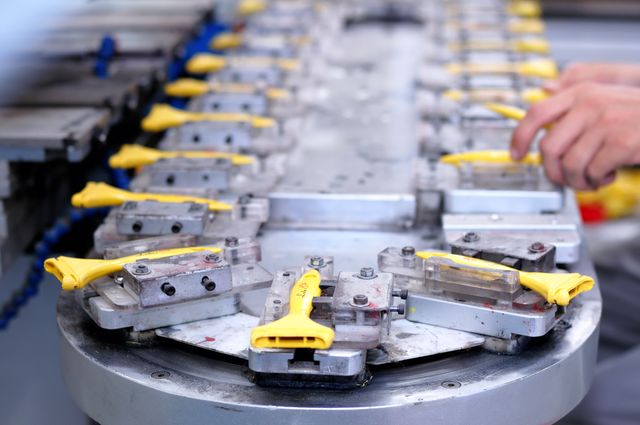
A reliable plastic company in Ohio transforms the product development lifecycle by combining advanced subtractive machining with high-volume molding technologies. When engineering teams require custom polymer components, partnering with a domestic facility eliminates international shipping bottlenecks and guarantees rigorous adherence to technical specifications.
Advancing Regional Production Standards With a Plastic Company in Ohio
The manufacturing sector relies heavily on robust regional supply chains to maintain operational efficiency and cost control. When industrial facilities require custom polymer components, collaborating with an established plastic company in Ohio ensures strict adherence to dimensional tolerances and material specifications. Domestic manufacturing eliminates customs clearance delays and international shipping bottlenecks, giving project managers complete visibility over production schedules and inventory levels.
Regional facilities integrate cutting-edge computer numerical control equipment with automated injection presses to handle complex geometries. Whether an engineering team requires lightweight thermoplastic enclosures or heavy-duty mechanical gears, local manufacturing partners deliver rapid prototyping and scalable production runs. This proximity allows technical leads to inspect first-article samples directly on the shop floor, accelerating design validation and reducing time to market. Furthermore, regional collaboration fosters transparent communication, enabling engineers to resolve complex design anomalies before full-scale production begins.
Evaluating Capabilities Across Leading Plastic Molders in Ohio
When developing custom plastic products, selecting the right manufacturing partner dictates the success of the entire program. Experienced plastic molders in Ohio utilize advanced multi-ton press lines equipped with automated material loaders and precision temperature controls. These operations accommodate a wide range of component sizes, from microscopic electronic connectors to large structural housings. Press capacities ranging from fractional tonnage up to thousands of tons ensure that thin-walled parts and heavy structural sections alike fill evenly without short shots or weld line weaknesses.
Tooling construction represents a critical phase in the molding workflow. Regional toolmakers perform thorough design-for-manufacturability reviews and mold-flow analyses before cutting steel. This proactive engineering approach identifies potential sink marks, warp zones, and fill issues early, saving valuable time and preventing costly tooling revisions later in the production cycle. Advanced cooling channel designs integrated directly into the mold base reduce cycle times and enhance dimensional stability across high-volume production batches.
Material Selection and Resin Engineering for Molded Components
Choosing the correct thermoplastic or thermoset resin ensures that finished components perform reliably under specific mechanical and thermal loads. Regional manufacturers work extensively with commodity and engineering grades, matching chemical resistance, tensile strength, and impact requirements to the intended operating environment.
| Polymer Resin Family | Key Mechanical Advantage | Typical Operating Range | Common Industrial Application |
| Acetal (POM / Delrin) | Low friction and high dimensional stability | -50°C to 120°C | Precision gears and mechanical bearings |
| Polycarbonate (PC) | Exceptional impact strength and optical clarity | -40°C to 115°C | Safety guards and transparent enclosures |
| Nylon (PA6 / PA66) | High tensile strength and wear resistance | -40°C to 120°C | Heavy-duty fasteners and sliding tracks |
| PEEK | Superior thermal and chemical endurance | -60°C to 250°C | Aerospace and medical instrument components |
Partnering With Specialized Plastic Fabricators Ohio
Beyond traditional injection molding, many industrial applications require secondary fabrication processes to achieve final part geometries. Specialized plastic fabricators in Ohio offer comprehensive post-processing solutions, including multi-axis CNC routing, ultrasonic welding, thermal insertion, and custom assembly. These secondary techniques allow manufacturers to transform standard stock shapes or molded blanks into highly customized end-use products without investing in expensive initial tooling.
Integrating these services under one roof reduces supply chain complexity and eliminates unnecessary transit steps. Instead of shipping molded blanks to secondary contractors for trimming or hole tapping, project managers utilize integrated facilities that deliver finished, ready-to-install assemblies directly to distribution centers or production lines. Specialized technicians also perform secondary annealing cycles to relieve internal stresses in machined plastics, ensuring long-term dimensional stability in demanding operating environments.
Quality Assurance and Transfer Tooling Protocols
Maintaining strict dimensional compliance requires rigorous quality control systems backed by ISO certifications and automated vision inspection equipment. Regional manufacturers employ coordinate measuring machines to verify tight tolerance features across every production lot, ensuring consistent part performance in the field. Statistical process control monitoring tracks critical machine parameters in real time, catching micro-variations before they impact product quality.
For companies looking to relocate existing production programs, transfer tooling services offer a seamless transition. Local engineering teams inspect, service, and requalify transferred molds, verifying runner balances and gate conditions to resume manufacturing without interruption. This thorough evaluation process guarantees that production yields remain high from the very first domestic run.
Frequently Asked Questions
What is the typical minimum volume requirement for custom injection molding?
Production thresholds vary by part complexity and press size, but standard custom molding programs generally start around 5,000 units annually. For lower volumes, CNC machining is recommended to bypass upfront mold tooling costs.
Can an existing mold be transferred from an overseas supplier to an Ohio manufacturer?
Yes. Tool transfer is a common procedure where regional facilities evaluate, service, and test incoming molds to ensure they meet domestic quality standards before running production.
How do regional fabricators prevent thermal distortion during plastic machining?
Machinists utilize sharp carbide tooling with polished flutes, optimized spindle speeds, and specialized coolant strategies to evacuate chips cleanly and prevent heat accumulation in the workpiece.
Engaging a qualified plastic company in Ohio ensures that your components benefit from advanced engineering support, rigorous quality standards, and dependable domestic logistics. By consolidating molding, CNC machining, and assembly operations within regional facilities, engineering teams achieve optimal efficiency and long-term supply chain resilience. Review your product specifications today and connect with trusted local manufacturers to advance your next project.